About Sheila
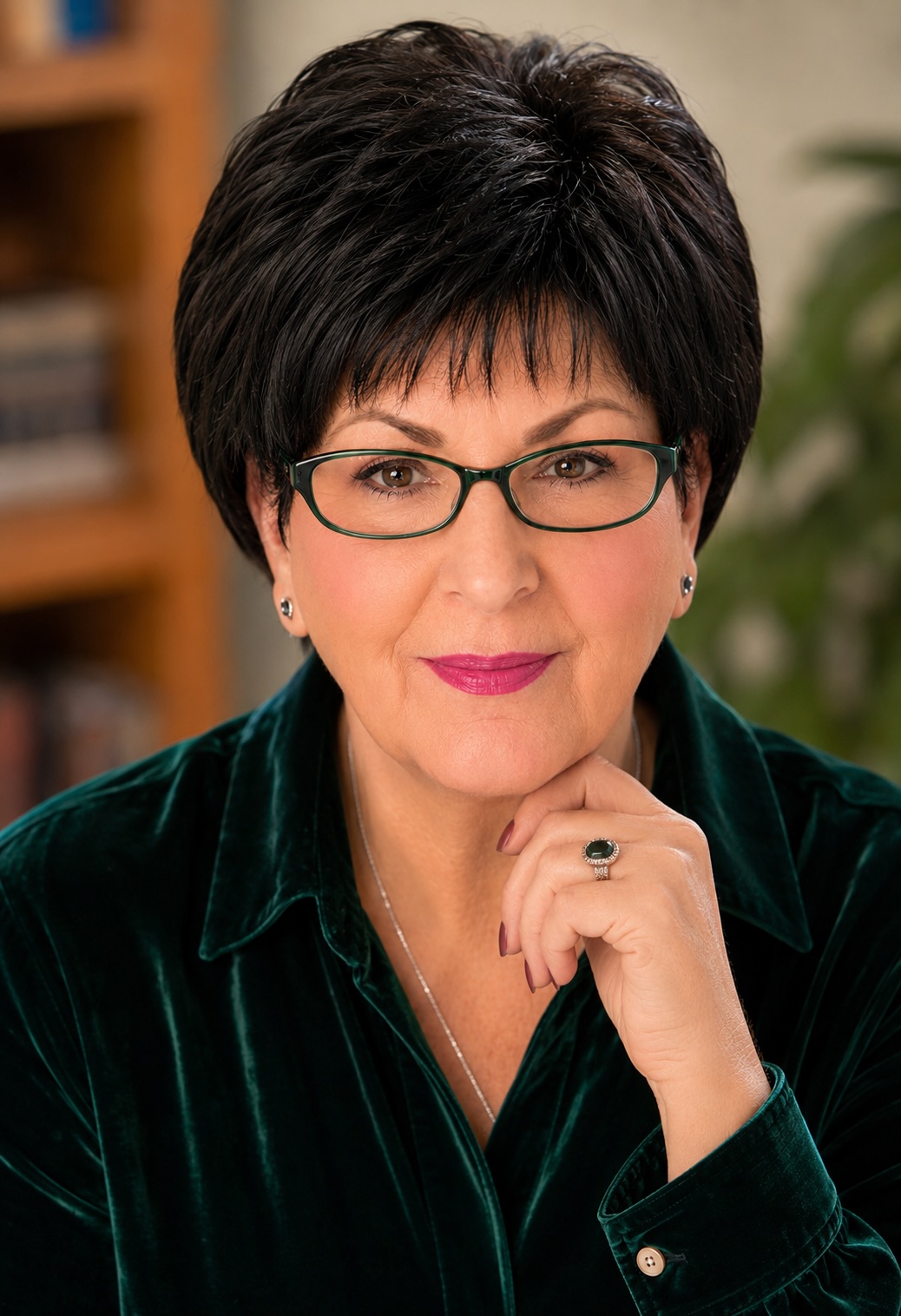
Sheila Dugan
“I am deeply grateful to the Masters who taught me. They gave me a foundation of knowledge that decades of teaching, questioning, testing and discovery have allowed me to make my own—and ultimately, to pass on to others.” – Sheila Dugan
Sheila Dugan is a Master Teacher of Voice whose work encompasses singing, public speaking, vocal function and performance.
Her approach is rooted in a simple principle: Before you can improve something, you have to understand what is actually happening.
That means listening and observing carefully, identifying what may be interfering with effective vocal production or communication, and developing an approach for the individual rather than applying the same formula to everyone.
Decades of teaching have given Sheila an extensive collection of techniques and technologies—but experience has also taught her when to adapt them, combine them or create something different for the person in front of her.
The Teacher Became the Student
The two recordings below tell an important part of that story.
In the first, Sheila is 21, performing one minute of Brahms’ Alto Rhapsody. She had been trained as a classical singer at university but, in retrospect, recognizes that she was too young for the demands of the work and had not yet developed the understanding of breath and breath management that would later become fundamental to her teaching.
Several years later, a three year bout of pneumonia (yes, you read that correctly) and prolonged, violent coughing seriously compromised her singing voice. Restoring it became both a personal and professional challenge.
The second recording, Michael Head’s *A Piper*, captures Sheila after she had applied and refined techniques developed during the first decade of her work as a voice teacher. The difference between the recordings is more than a difference in age or repertoire. It reflects a change in how the instrument was being used.
Or, as Sheila puts it:
“You can hear what happened after Sheila Dugan studied with Sheila Dugan.”
Listen to the recordings
Brahms - Alto Rhapsody
Age 21
Michael Head - A Piper
Age 30
The experience of rebuilding her own voice reinforced something that continues to
shape Sheila’s work today:
"Effective teaching begins with understanding the individual—not imposing a
formula.”
The Bridge Between Voice, Performance and Public Speaking
Voice and public speaking share some important foundations—but expertise in one does not automatically create expertise in the other.
Sheila’s work in public speaking grew not only from her extensive background in voice and performance, but from her own experience as a university and conservatory teacher, conducting classes and presenting before groups, followed by years of working individually with actors and public speaking clients.
That combination matters.
Both singers and speakers use the same human instrument, and both can be affected by tension, anxiety, physical habits and the awareness of being observed and judged. But the demands of effective public speaking are distinctly its own.
Effective public speaking should never look like or feel like a performance.
The goal is not to teach someone to act like a polished speaker. It is to identify what may be preventing that person from communicating with greater clarity, authority, authenticity and ease—and develop the skills that allow those qualities to emerge naturally.
Sheila’s public speaking training is highly individualized because the problem is not the same in every speaker—and neither is the solution.
Innovator
Sheila’s work has never been limited to established methods. Decades of teaching have taught her when to use a proven technique, when to adapt it—and when an individual requires an entirely different approach.
Career
Sheila served as Voice Coach for STAGES St. Louis and Metro Theater Company, taught for many years at Southern Illinois University Edwardsville, and developed the vocal program for the St. Louis Conservatory and Schools for the Arts.
Her career has encompassed teaching, performance, vocal coaching, public speaking and the development of individualized approaches to voice and communication.
She is a member of the National Association of Teachers of Singing and has been recognized in Who’s Who of American Women, Who’s Who in Entertainment, and Who’s Who in American Education.
Educational Credentials
Sheila holds Bachelor of Music and Master of Music degrees in Voice Performance from Southern Illinois University, with additional post-graduate study in Speech, Language and Hearing Sciences at Fontbonne University and Saint Louis University.
The Teachers Who Shaped My Work
No teacher develops in isolation.
Sheila’s studies in voice and repertoire included work with Dale Moore, John Wustman, Pierre Bernac and Ernst Wolf, with additional study in vocal pedagogy with Dale Moore, Richard Miller and William Vennard.
An accomplished pianist, Sheila studied with Ruth Slenczynska, Renato Premezzi, Wallace Stephens, Herb Drury, Edward Petch and Lois Percival. Her musical training also included violin, viola, cello, organ and harpsichord.
That breadth of study helped form the foundation upon which decades of teaching, observation and continued discovery have been built.
Special Acknowledgement
“I will always be indebted to my beloved principal voice teacher, Dale Moore (1932–2016), for the extraordinary example he set, for teaching me so well, for believing in me, and for becoming my supporter and dear, dear friend.”
—Sheila Dugan
Ms. Dugan’s current professional affiliations include: